

“Bangladesh must navigate between normative commitments, economic pragmatism and geopolitical hedging. An injudicious alignment could jeopardize trade privileges or labor market access; excessive reticence could invite criticism of moral equivocation. For middle powers, survival often lies in calibrated ambiguity—yet ambiguity itself demands dexterity.”
Geography, in an age of weaponised interdependence, is a deceptive comfort. A missile exchange in the Persian Gulf may appear cartographic-ally distant from Bangladesh, yet the shockwaves of such a conflagration travel along invisible arteries of trade, energy flows and remittance corridors, striking with unforgiving force at the heart of our macroeconomic architecture.
The renewed hostilities in the Middle East—precipitated by coordinated American and Israeli strikes on Iran and Tehran’s retaliatory barrage against US installations across the region—are not merely episodes of regional brinkmanship. They portend systemic tremors for economies like ours, structurally enmeshed in Gulf stability.
Bangladesh’s developmental ascent over the past two decades has rested upon a precarious tripod: imported energy, export-oriented industrialization and labor migration. Each of these pillars is acutely sensitive to Middle Eastern volatility. Should the present confrontation metastasize into a protracted war, the ramifications will transcend diplomatic posturing and assume the character of a full-spectrum economic stress test.
The most immediate vulnerability lies in energy dependency. Bangladesh is not simply an importer of fuel; it is a captive of global hydrocarbon price cycles. A significant proportion of our electricity generation hinges upon imported LNG and refined petroleum. Any disruption to supply chains or surge in benchmark crude prices would inflate generation costs, which in turn would cascade across manufacturing, agriculture, transportation and retail. Energy is the bloodstream of the economy; contaminate it, and the entire organism falters.
The strategic fulcrum of this risk is the Strait of Hormuz—a maritime narrow but key gateway through which roughly one-fifth of the world’s petroleum supply transits daily. It exemplifies how geography can be transmuted into geopolitical leverage.
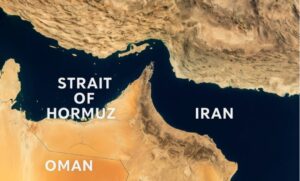
A closure—through insecurity—would detonate oil markets globally. Even transient disruptions can trigger speculative surges, freight cost escalation and insurance premiums that collectively distort global pricing mechanisms.
For Bangladesh, already contending with balance-of-payments fragility and reserve depletion, such a shock would be profoundly destabilizing. Inflationary pressures, which have proven stubborn in recent months, would likely intensify into a more intractable phenomenon. Fuel price hikes possess a pernicious multiplier effect: transportation costs escalate, input prices swell, and producers transmit the burden to consumers. What begins as an external supply shock evolves into embedded cost-push inflation. The social ramifications are not trivial. In a country where a substantial segment of the population remains price-sensitive, sustained inflation corrodes purchasing power, exacerbates inequality and foments public disquiet.
Political economy scholarship underscores a critical insight here: external shocks frequently transmute into domestic political strain. Governments must choose between fiscal haemorrhage through subsidies and social unrest through price liberalization. Neither option is benign. Subsidies enlarge fiscal deficits and complicate debt management; price passes-through risk igniting popular dissatisfaction. The calculus is as political as it is economic.
Trade and export resilience form the second axis of concern. Bangladesh’s ready-made garment sector—our principal foreign exchange engine—operates within tightly synchronized global supply chains. Maritime disruptions in the Gulf or adjacent sea lanes would elongate delivery timelines, inflate shipping costs and potentially precipitate order cancellations. In a hyper-competitive global market, reputation reliability is the currency. Even episodic logistical failures can erode buyer confidence and surrender market share to more geographically insulated competitors.
The labor migration dimension compounds the fragility. The Middle East remains the preeminent destination for Bangladeshi migrant workers. Remittances constitute a vital counterweight to trade deficits, underpinning household consumption and fortifying foreign exchange reserves. Escalating hostilities, however, may imperil expatriate employment, catalyze premature repatriation or constrict remittance flows through financial disruptions. A contraction in remittance inflows would not merely be an accounting setback; it would constrict domestic liquidity and amplify macroeconomic stress.
Moreover, return migration on a significant scale would engender domestic labor market pressures. Reintegration requires absorptive capacity—employment opportunities, retraining frameworks and social safety nets—that are not infinitely elastic. The spectra of simultaneous export slowdown and remittance contraction represents a particularly invidious double bind.
Diplomatically, the crisis presents its own labyrinth. In moments of geopolitical rupture, the lexicon of official statements becomes an instrument of strategic positioning.
Bangladesh must navigate between normative commitments, economic pragmatism and geopolitical hedging. An injudicious alignment could jeopardize trade privileges or labor market access; excessive reticence could invite criticism of moral equivocation. For middle powers, survival often lies in calibrated ambiguity—yet ambiguity itself demands dexterity.
If the conflict endures, adaptive re-calibration will be imperative. Energy diversification, long relegated to policy rhetoric, must assume operational urgency. Expanding renewable capacity, fortifying strategic petroleum reserves and exploring alternative LNG suppliers are no longer discretionary ambitions but strategic necessities. Regional diplomacy, even with partners where relations have cooled, may require pragmatic re-engagement to secure transit routes or emergency supply arrangements. Geo-economics, not ideology, must dictate priorities.
From a structural vantage point, the unfolding crisis epitomizes the vulnerabilities of hyper-globalization. Bangladesh’s integration into global markets has yielded extraordinary growth, yet it has also embedded exposure to exogenous convulsions. The Gulf war, should it escalate, will serve as a stark reminder that interdependence, while generative of prosperity, also transmits instability with ruthless efficiency.
The question confronting policymakers is not whether Bangladesh can insulate itself entirely—it cannot—but whether it can attenuate the shock. Strategic foresight, institutional agility and disciplined fiscal management will determine whether this episode becomes a temporary perturbation or a protracted setback.
Distant artillery may not scar our physical landscape, but its economic reverberations could reconfigure our developmental trajectory. In an era where geopolitics and geo-economics are inseparable, prudence demands anticipation. The fires in the Gulf may yet be contained. But if they rage unchecked, Bangladesh must be prepared not merely to endure the heat, but to recalibrate its course amid the flames.
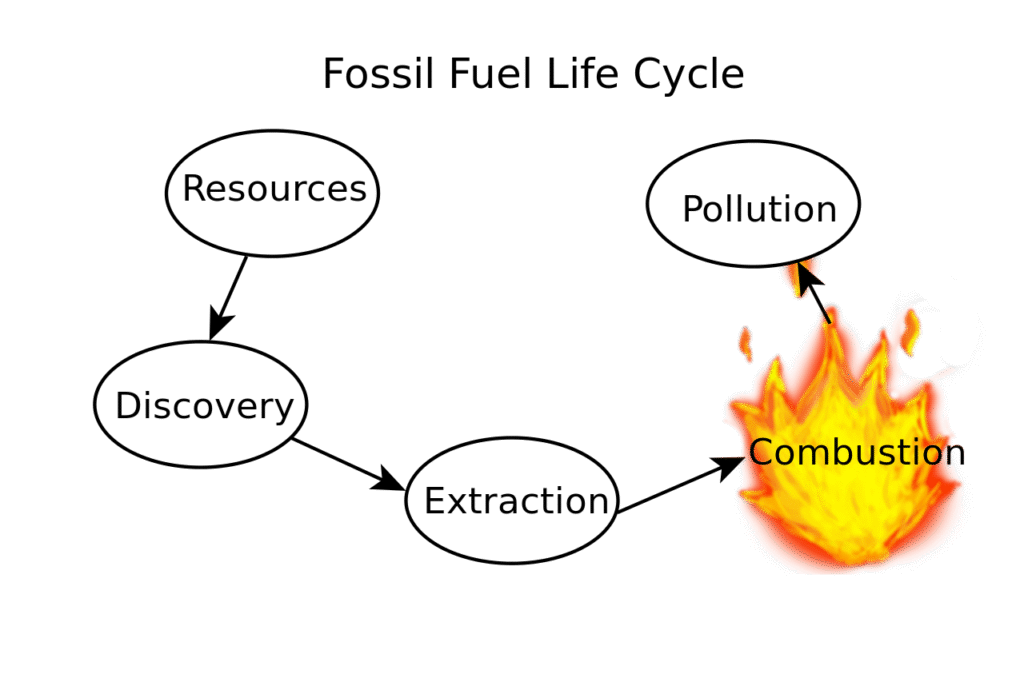
And, of course, we must think about alternatives of fossil fuel. The warmonger should not burn a single more fireweapon those are making earth more warmer. Do not make our way difficult to energy transformation.

The author can be reached to saifulgpju@gmail.com