

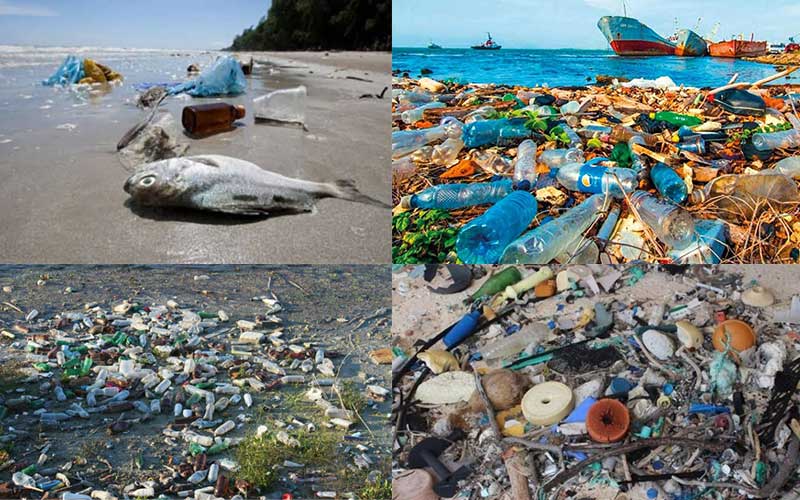
Bangladesh’s rivers are the country’s lifeblood. They irrigate paddy fields, feed fisheries, and carry goods and people across the delta. But today, many of those same rivers have become conveyor belts for plastic, a relentless stream of sachets, bottles, torn shopping bags, and microfragments that flow from upstream cities and even across national boundaries into the Sundarbans and the Bay of Bengal. The result is a transboundary pollution crisis that threatens biodiversity, livelihoods, and the very resilience of coastal communities.
Scientists estimate that the great river systems feeding the Bay of Bengal, including the Ganges, Brahmaputra, and Meghna, collectively discharge millions of tonnes of plastic waste every year. These plastics break down into microplastics that persist in sediments, water, and the food web, reaching remote mangrove creeks and the tissues of fish and shellfish consumed by people. The Sundarbans, the world’s largest contiguous mangrove forest and a UNESCO World Heritage Site, is no exception. Studies have found significant microplastic contamination in surface waters, sediments, and fish across the Sundarbans region, and post-storm surveys recorded tens of tonnes of visible plastic debris washed into protected areas after cyclones.
Transboundary movement of plastic waste compounds the problem. Some plastics originate from within Bangladesh’s densely populated cities and coastal towns; others hitch a ride across borders via river currents and maritime routes or arrive as poorly regulated imports and “recycled” shipments. For countries like Bangladesh, a lower-riparian nation with a long coastline and porous marine borders, this means that effective solutions cannot be purely national; they demand regional cooperation and global accountability. Bangladesh itself has engaged actively in global negotiations on plastic pollution and has submitted proposals emphasizing the transboundary nature of the problem and the need for remediation funding and cooperative action.
The ecological stakes are high. Mangrove habitats, estuarine nurseries, and coastal fisheries are keystone systems that support a vast array of species, from the estuarine dolphins and hilsa fish to tiger populations that use the Sundarbans as a hunting ground. Plastic debris smothers mangrove roots, reduces water quality, and causes entanglement and ingestion risks for wildlife. Microplastics move up the food chain, with unknown long-term consequences for fish stocks and human health. The loss of biodiversity here is not an abstract statistic; it directly undermines food security and the income of fishing and coastal communities already on the front lines of climate impacts.
Local research and civil society action show the problem is not just environmental but social and governance-related. NGOs such as the Environment and Social Development Organization (ESDO) have documented persistent single-use plastic consumption, gaps in enforcement of bans, and the need for community-based interventions in places like Mongla and the Sundarbans buffer zones. ESDO’s recent field audits and stakeholder consultations have highlighted weak waste collection in coastal towns, overflowing dumpsites near estuaries, and the challenges of tourism-related waste in sensitive conservation zones. These grassroots findings complement academic surveys and call for solutions rooted in the local context.
So, what should be done? The response must be layered and urgent. Strengthening river-basin cooperation is key. Upstream and downstream countries need shared monitoring, agreed targets for preventing plastic leakage, and joint clean-up and containment measures. Transboundary rivers require joint river-basin management plans that explicitly include plastic pollution controls. Closing the loop through circular economy policies, such as Extended Producer Responsibility (EPR), incentives for reuse and refill systems, and strict controls on single-use sachets and other hard-to-recycle formats, can reduce plastic entering the environment. Investments in waste collection, segregation, and safe recycling in coastal districts are essential.
Ecological hotspots, particularly the Sundarbans and other protected areas, must be prioritized for plastic interception through shoreline and estuary traps, managed clean-ups, and strengthened waste management for nearby communities and tourism operators. Rapid response plans following cyclones and floods can prevent large pulses of debris from settling in mangrove refuges. Furthermore, investing in data and community monitoring is crucial. Better, transparent data on the sources, pathways, and composition of transboundary plastic will sharpen interventions. Empowering coastal communities to monitor and report pollution creates local guardianship while feeding national and regional datasets.
At the international level, the Global Plastics Treaty currently being negotiated offers a historic opportunity, if it is ambitious enough. The treaty debates center on whether to address plastics across their full lifecycle (including production limits and design restrictions) or to focus narrowly on waste management. For Bangladesh and similar countries, a strong treaty could mean access to technical and financial support for transition measures, constraints on the global flow of hazardous plastic wastes, and binding requirements for producers and exporters that have historically externalized pollution costs. But a weak treaty, one that fails to curb production or address trade flows, risks leaving lower-income, coastal nations to shoulder the clean-up bill.
Bangladesh must therefore press for a treaty that recognizes transboundary impacts, secures funding for remediation and just transition, and protects the rights and livelihoods of affected communities. Simultaneously, national leadership can accelerate reforms at home: tougher enforcement of existing bans, incentives for refill and reuse, support for informal waste workers, and regionally coordinated river-basin measures.
Ultimately, the story of plastics in Bangladesh is also a story about responsibility. Plastics do not respect borders, and neither can our responses. From muddy riverbanks in Dhaka to the quiet creeks of the Sundarbans, the choices made by upstream manufacturers, exporting countries, national policymakers, and local citizens will determine whether these vital ecosystems survive for the next generation. If the global community seizes the moment, with an ambitious treaty backed by real finance and implementation, there is hope that Bangladesh and other vulnerable nations will be spared the worst of this plastic tide. Until then, the rivers will keep telling their story, and it is one we must act to rewrite.