

While Bangladesh aspires for economic growth and greater engagement on a global stage, a hidden problem threatens the very foundations of the country. The expansion of the black market for illegal wildlife trade (IWT) has grown into a multibillion-dollar industry, operating both within and across our borders. One of the most destructive forces contributing towards the depletion of biodiversity, illegal wildlife trade strikes at the Sundarbans and spreads into the markets of Dhaka. Often regarded as a country’s priceless treasure, illegal wildlife trade is causing immense damage to Bangladesh, disrupting the balance of nature, threatening public health, and pushing towards extinction of many recognised species.
A country rich in wildlife, poor in protection
Bangladesh is blessed with a wealth of biodiversity: from the Bengal tiger of the Sundarbans to the migratory birds that thrive in our wetlands. More than 1,600 species of wild animals are known to inhabit the country, and this very abundance makes us a target for smugglers. Live birds appear openly in Dhaka’s markets, turtles are smuggled across borders, and reptiles are trafficked along our waterways. These animals are destined for the pet trade, for meat, for so-called traditional medicine, or for fashion products.
The Wildlife Crime Control Unit (WCCU) reports that in 2024 alone it rescued more than 4,500 animals, including oriental pied hornbills, fishing cats and turtles. Conservationists insist the real number is far higher. For every confiscated shipment there are countless others that slip through, hollowing out the country’s natural heritage.
The cruel path from forest to marketplace
Every sale tells a story of cruelty. Hunters lay metal traps for small mammals, snares for deer and antelope, and raid nests for eggs and chicks. Birds are often captured at dawn, crammed into bamboo boxes, and denied food or water until sold. Along the coast, sea turtles—already under pressure from climate change—are killed for their flesh or their shells.
On 21 August 2025, a WCCU patrol raided the Bot Tola bird market in Mirpur-1, Dhaka. They found 72 birds of 12 species, including hill mynas, spotted doves, green pigeons and swamphens, all confined in tiny cages. The birds were released that same day—a small but symbolic victory in a fight where most animals never return to the wild. Similar raids now occur regularly across bird markets in Dhaka, from Tongi Bazar to Komolapur, yet the demand shows no sign of slowing.
Global networks, local impact
Although Bangladesh generates some of the demand, the trade is part of global supply chains. Pangolin scales can fetch thousands of dollars per kilogram in certain Asian markets. Leopard skins, loris pelts and python hides find their way into the international fashion industry. Online trading platforms drive the capture of songbirds and game birds, violating CITES regulations and fuelling demand across borders.
Marine species are no less vulnerable. Sharks and ray-finned fish from Bangladesh’s coasts are targeted for their fins and dried parts, trafficked to markets in China, Vietnam and Indonesia for use in food, medicine and ornaments. Small apes, including hoolock gibbons, hanuman langurs and slow lorises, are captured for the pet trade, particularly across the border into India. Many die en route, hastening the decline of species already facing extinction. These lesser-known victims rarely capture headlines, but their disappearance disrupts ecosystems in ways that scientists are only beginning to understand.
Why we should care
Illegal wildlife trade is not merely a matter of losing animals—it destabilises society in multiple ways. Ecologically, the removal of predators leads to unchecked growth in pest populations, while the loss of pollinators threatens crop yields. Economically, the extinction of iconic species such as tigers, elephants and rare birds undermines the eco-tourism sector, a potential source of millions in revenue.
Public health is also at risk. The crowded, unhygienic conditions of wildlife markets create fertile ground for zoonotic diseases, heightening the chances of outbreaks like rabies, Nipah virus, or even another pandemic akin to COVID-19. Food security suffers when freshwater turtles, dolphins and amphibians are illegally removed from rivers and wetlands, disrupting fisheries that sustain local communities. Moreover, wildlife crime is rarely isolated—it often intersects with networks trafficking weapons, drugs and people, undermining law enforcement and national security.
The dwindling tiger population of the Sundarbans, now drastically decreased likely to just 125, stands as a stark warning. Once a symbol of national pride, its near-collapse illustrates what is at stake if action is delayed.
Bangladesh fights back
Bangladesh has not stood idle. The Wildlife (Conservation and Security) Act 2012 provides legal authority to seize trafficked animals and prosecute offenders. Yet enforcement remains difficult: manpower is limited, legal loopholes persist, and profits are high. Despite these challenges, notable victories have been achieved.
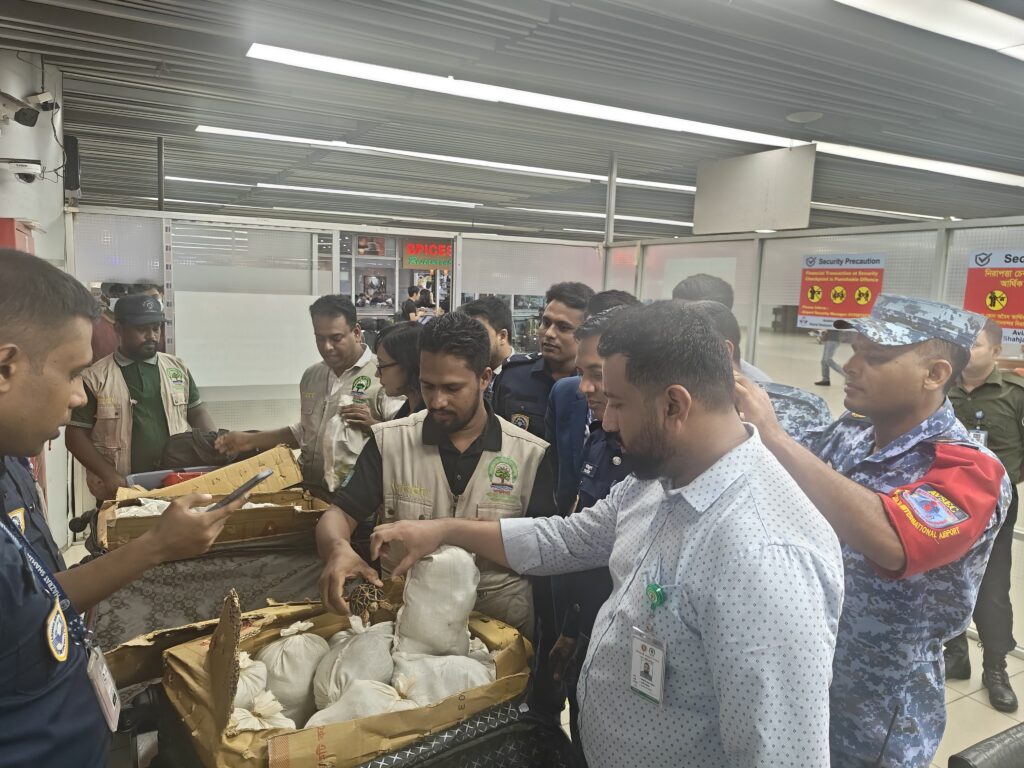
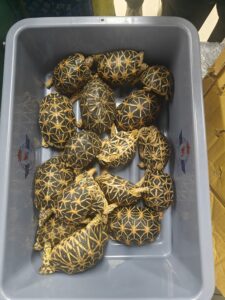
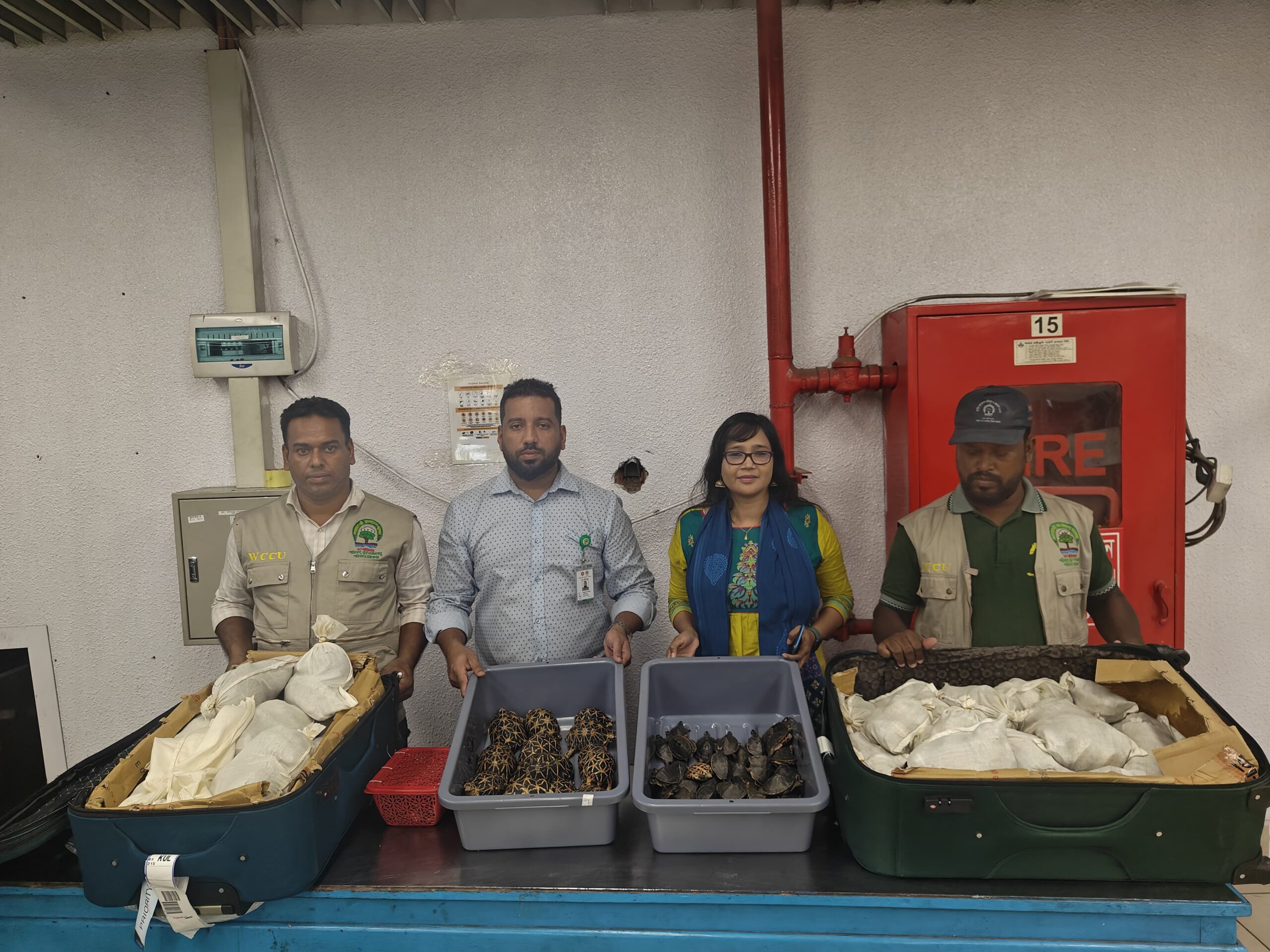
In early 2025, WCCU and Customs officers intercepted 305 alligator turtles at Hazrat Shahjalal International Airport, sparing them a life of captivity overseas. In 2024, more than 800 turtles and tortoises were rescued from a godown in Chandpur, a known smuggling hub to India. Awareness campaigns, community engagement and regional collaboration through the South Asia Wildlife Enforcement Network (SAWEN) are slowly making the trade riskier for traffickers.
A shared responsibility
Wildlife crime unfolds not in distant jungles but in our own markets, rivers and forests. Protecting this natural wealth demands stronger law enforcement, greater community involvement, and, crucially, a reduction in demand. Citizens must refuse to buy, sell, or keep wild animals.
As one WCCU officer remarked after releasing a rescued fishing cat into the wetlands of Narayanganj: “When we return them into the wild, we are returning a piece of Bangladesh to itself.”
The wildlife of Bangladesh are the silent victims of this hidden trade. Their survival now depends on whether we choose to act.