
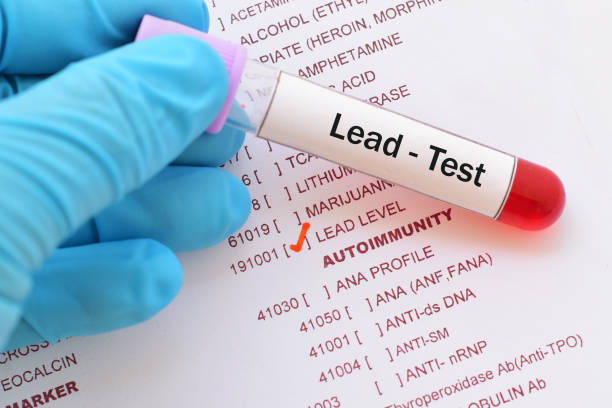
Lead is a naturally occurring element present in minimal quantities inside the Earth’s crust. While it has some beneficial uses, it can be toxic to humans and animals, causing health effects (EPA). Every aspect of our surroundings, including the air, soil, water, and even the interior of our homes, contains lead. Human actions, such as the use of fossil fuels, including the previous use of leaded gasoline, certain industrial facilities, and lead-based paint in houses, are mostly to blame for our exposure. Paint, ceramics, pipes and plumbing supplies, solder, gasoline, batteries, ammunition, and cosmetics are just a few of the many items in and around our houses that contain lead or lead compounds. Inhalation of lead particles generated by burning materials containing lead, for example, during smelting, recycling, stripping leaded paint and plastic cables, and ingestion of contaminated dust, soil, water, or food, causes lead poisoning in the human body. Due to their higher absorption rates (4–5 times higher than adults) and frequent hand-to-mouth activity, young children are particularly vulnerable to lead poisoning. People who eat non-food objects, or have pica, are significantly more at risk. Some areas have seen widespread poisonings and even fatalities due to lead exposure from polluted soil, dust (from mining or battery recycling, for example), and outdated paint. After consumption, lead builds up in bones and teeth, travels to critical organs including the kidneys and brain, and can be discharged during pregnancy, endangering the fetus. Children who are malnourished, particularly those who are iron or calcium deficient, absorb lead more readily, which exacerbates its harmful consequences (WHO). Lead is a neurotoxin that can cause severe health problems in humans, particularly young children. Adults can also be affected by lead poisoning; however, children are more susceptible, and even low levels of lead can cause damage to their growing brains and bodies. Lead exposure in children can cause permanent and far-reaching effects. Lead is particularly hazardous to infants and young children.
According to the Bangladesh Institute for Health Metrics and Evaluation (IHME) (2017), the average estimated background blood lead levels (BLLs) among children in Bangladesh are 6.83 μg/dL (lower estimate: 6.22; upper estimate: 7.50). Ericson et al. (2021) estimate this figure is 7.87 μg/dL. In 2023, an IEDCR study funded by UNICEF reported that approximately 65% of 980 children had blood lead levels exceeding 3.5 micrograms per deciliter (µg/dL), exceeding the reference value (3.5 µg/dL) set by the US Centers for Disease Control and Prevention (CDC). A total of 80% of the children had blood lead levels above 5 µg/dL, with an average of 7.6 µg/dL, and the highest recorded at 36 µg/dL found in the ICDDR,B study. In 2023, an IEDCR study funded by UNICEF reported that approximately 65% of 980 children had blood lead levels exceeding 3.5 micrograms per deciliter (µg/dL), exceeding the reference value (3.5 µg/dL) set by the US Centers for Disease Control and Prevention (CDC). A total of 80% of the children had blood lead levels above 5 µg/dL, with an average of 7.6 µg/dL and the highest recorded at 36 µg/dL found in the ICDDR,B study. In 2022, Pure Earth, an international nonprofit organization based in New York City, tested 367 items available in the markets of four cities in Bangladesh and found lead (Pb) presence in 96 of them. Additionally, an IEDCR study revealed high levels of lead in local toys, paints, aluminium and ceramic cookware, and sweetener containers. Furthermore, the Environment and Social Development Organization’s recent study detected elevated lead content in 50% of the samples of industrial paints tested.
The current known and suspected sources of lead exposure in Bangladesh are mainly from lead acid battery manufacturing, and others are recycling, jewellery making, gold waste processing, pesticides, coal mining, shipbreaking, turmeric, aluminium cookware, paint, cosmetics, religious powders, amulets, children’s toys, etc. Lead has been identified in several common foods, i.e., vegetables, rice, milk, and animal meat, when storing or processing food in Bangladesh (UNICEF). Moreover, lead has severe effects on the environment as well. Lead infiltrates and spreads throughout ecosystems. Lead from the atmosphere accumulates on vegetation, ground, and water surfaces. The physical and chemical characteristics of lead, combined with the biogeochemical dynamics of ecosystems, will affect the spread of lead across ecosystems. Bangladesh is experiencing a growing public health crisis due to lead poisoning. The project will devise a plan with a specific timeline to tackle the issue. To comprehend lead poisoning in Bangladesh as a child rights issue, we must be able to visualize it, and this needs a multi-sectoral and urgent response to the environmental and health impacts. A recent study by ESDO (2020) reveals that the Lead Battery Manufacturers Association in Dhaka believes to upwards of 80% of the lead recycled in Bangladesh is produced in the informal sector. Without knowing exactly the tonnage of ULAB recycled in the formal sector, it is difficult to confirm the amount of ULAB recycled informally. Still, in the absence of any official lead production data or records of the capacities of LAB manufacturers licensed to recycle ULAB, the default position is that the informal sector may well be the major source of lead for the LAB manufacturing sector.
In 2018, ESDO successfully advocated with BSTI for a mandatory 90 ppm lead limit in household paints, making Bangladesh the first country in South-East Asia to adopt such a regulation. From 2021-2023 they expanded focus to toys, cookware and batteries, uncovering widespread lead contamination and pushing for stricter regulations. To build on ESDO’s achievements and address the persistent threat of lead poisoning, several solutions are recommended.
First, we must strengthen regulations and enforcement by reducing the permissible lead limit in paints from 90 ppm to 50 ppm, aligning with global standards, and expanding regulations to cover industrial paints, toys, cookware and cosmetics, ensuring mandatory lead content labeling with strict penalties for false “lead-free” claims and non-compliance.
Second, we should promote lead-free alternatives by introducing tax incentives for industries producing lead-free products like paints and batteries, subsidizing safer alternatives to reduce the cost gap between lead-free and lead-based materials, and supporting research into non-toxic substitutes for lead in consumer products.
Third, improving recycling and waste management is crucial by formalizing the recycling of used lead-acid batteries (ULAB) with environmental safeguards, implementing a “green tax” on lead-based products to fund safer recycling programs, and launching community battery return initiatives with financial incentives.
Fourth, raising public awareness through nationwide campaigns on lead poisoning risks targeting parents, schools and healthcare workers, training workers in high-risk industries like paint and battery recycling on lead safety measures, and engaging youth and media to amplify advocacy efforts.
Fifth, multi-stakeholder collaboration is needed by strengthening coordination between government agencies like BSTI, DoE, and the Ministry of Environment to harmonize policies, partnering with private sector manufacturers to adopt voluntary lead-free standards, and leveraging global alliances with WHO, UNEP, and GAELP to adopt best practices. ESDO, in collaboration with UNICEF, is working toward a National Action Plan to systematically eliminate lead pollution. This strategy includes short-term measures to enforce existing regulations and conduct nationwide product testing, mid-term actions to develop standards for all lead-containing products and formalize recycling systems, and long-term goals to integrate lead poisoning prevention into public health policies and establish a national surveillance system.
Lead poisoning is a silent crisis threatening the health and future of Bangladesh’s children. However, with coordinated efforts – strengthening regulations, promoting safer alternatives, improving waste management, and raising awareness – we can eliminate this invisible danger. ESDO’s proven approach demonstrates that change is possible. Now, it is time for the government, industries, and citizens to unite in this mission. A lead-free Bangladesh is not just a vision – it is a necessity for a healthier, safer future. Environment and Social Development Organization (ESDO) “Empowering Change for a Sustainable Future”.